


A technological solution may appear feasible on paper, but its practical performance can only be assessed in the field.
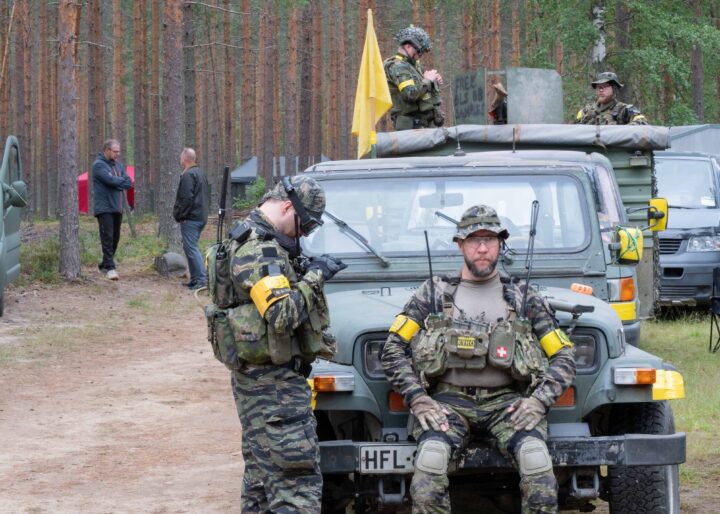
The international Battlegroup 2026 airsoft event brought companies and experts together at Halli in Jämsä, Finland, in July to test future energy solutions, mobile communications, unmanned systems and technologies developed to detect them. Over the course of the four-day event, the technologies were tested and assessed in varying field conditions. The first days were spent building the test platform and integrating the systems. On the visitors’ day, a wide range of partners and customers were able to explore the solutions.
Millog built a test platform for the event, bringing together solutions developed by various organisations. This created a meeting point where companies, experts, and customers could network and exchange ideas – and, in the end, the backup generator was even used to provide power for catering for the airsoft players.
Field testing as a catalyst for development
Millog actively develops its capabilities through research, development and innovation (RDI). This development work is based on the belief that the best solutions are created through collaboration with other organisations and, above all, through practical testing.
In a real operating environment, issues may emerge that cannot be anticipated around the design table. The aim of field testing is not to avoid failure, but to gain experience and learn from successes and failures. When a solution does not work as expected, valuable information can be obtained about what needs to be improved, changed or tested again.
“If the targets are set too low, you will always succeed. Sometimes you need to think ‘outside the box’ and challenge established ways of working. Development requires courage, as it means putting solutions to the test in a real operating environment,” says Matti Honkela, the project coordinator who organised the field testing.
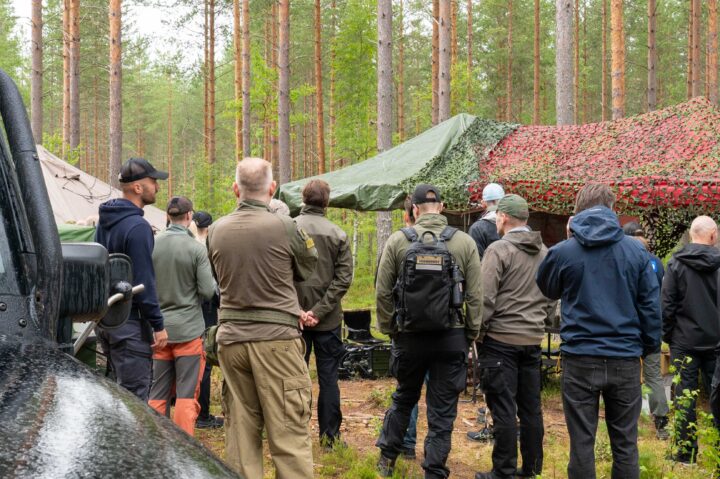
Since 2024, Millog has conducted field tests on different themes, with each test providing information for the next stage of development. The focus areas this year were new energy solutions and base protection. After the event, the findings from the field testing were compiled and reported to Millog’s strategic partner, the Finnish Defence Forces. The lessons learned will be used in subsequent stages of development. A new field test is already on the drawing board.
Millog brought experts together on a shared test platform
Battlegroup 2026 brought together established high-tech companies and start-ups. The different organisations’ areas of expertise complemented one another, enabling the solutions to be assessed as part of a wider system.
“We do not build new capabilities on our own. We want to bring together companies whose areas of expertise support one another. We need both experienced and new players because the best ideas often emerge from combining perspectives from very different backgrounds,” Honkela explains.
Others attending the event shared the same view.
“When solutions are tested in a real environment, practical challenges often emerge. It is precisely when reality hits you in the face that the best innovations can be born. And when experts from different fields work together, they learn from one another,” says Jarmo Puputti, Director of the Digital Defence Ecosystem (DDE).

The event also provided companies an opportunity to showcase their expertise, establish contacts with defence-sector organisations, receive feedback on their solutions, and discuss potential collaborations in an environment where the practical performance of the technologies could be evaluated concretely.
From the field to the needs of the future
Representatives of the Finnish Defence Forces were also present on the visitors’ day, observing the companies’ field demonstrations and assessing the potential applications of their technologies.
Energy solutions and their connection to data transmission and operational reliability attracted particular interest. In a changing operating environment, energy is not merely an individual support function; it is directly linked to how effectively other systems and capabilities can be kept operational.
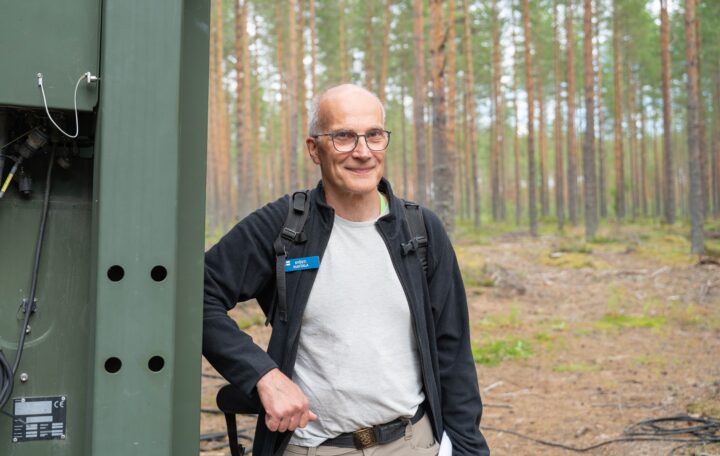
According to Kyösti Huhtala, a researcher at the Finnish Defence Forces Logistics Command, changes in the security environment in recent years have highlighted the importance of energy self-sufficiency.
“The role of different forms of energy on the battlefield is constantly changing. Alongside diesel, new solutions are needed to ensure operational capability in different situations,” he says.
As a strategic partner of the Finnish Defence Forces, Millog aims to support its partner’s capabilities, thereby fulfilling its own core mission as reliably as possible. Huhtala says, that Millog’s active participation in the event demonstrates its commitment to development work from the perspective of the Finnish Defence Forces.
“This has been a really good event. For us, events like this are all about gathering information to develop our capabilities in the future,” he sums up.
Cooperation continues after the test
The field testing at Battlegroup 2026 once again strengthened cooperation between companies, the DDE and the Finnish Defence Forces, while also providing new perspectives on the types of solutions that will be needed in the future.
According to Honkela, this is where the key value of field testing can be seen: the objective of an individual test is not to find a ready-made solution, but to generate information for the next stage.
“This is how we can discover new, workable innovations – by working together,” he concludes.