
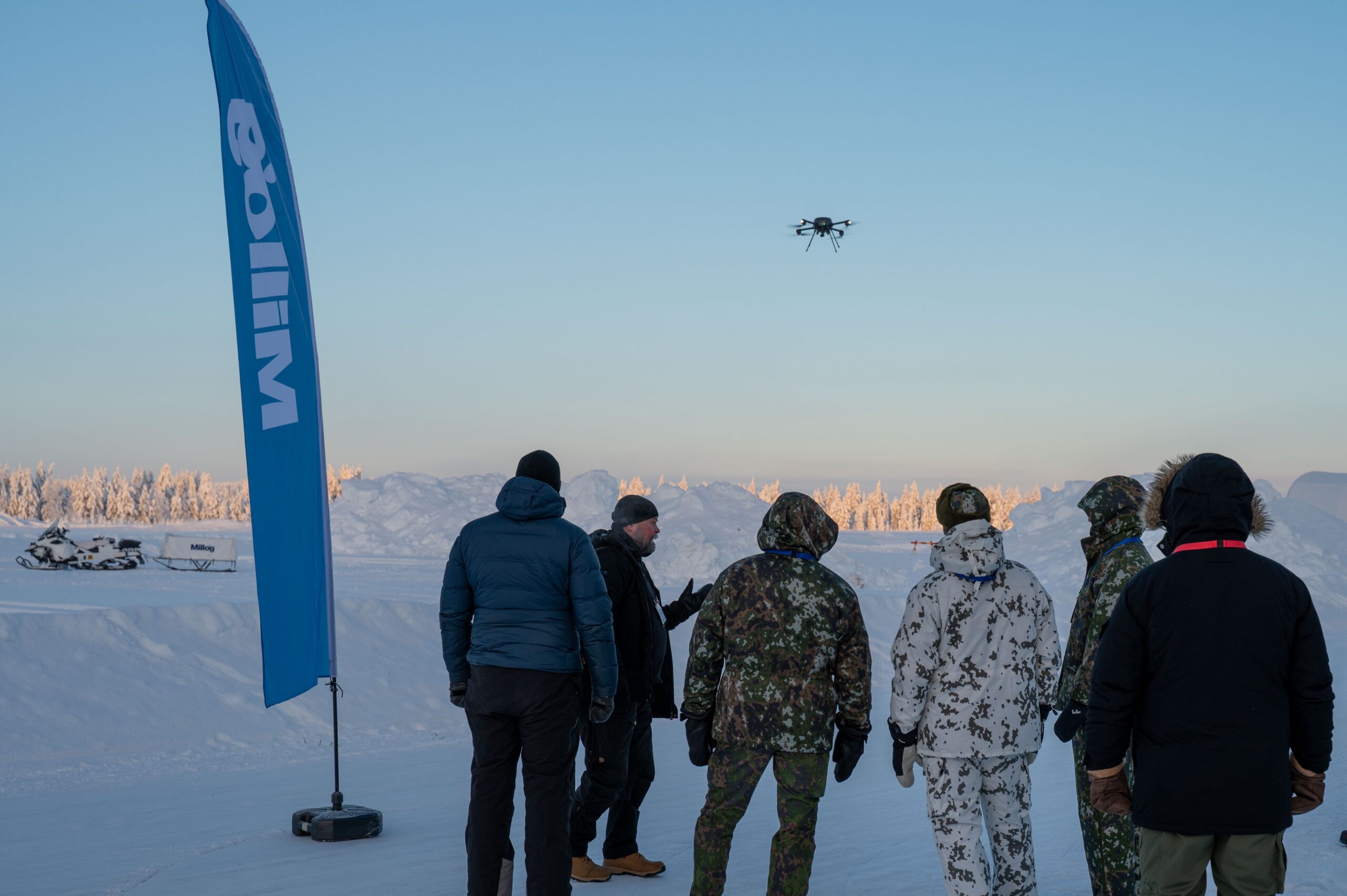

Millog tested how repair capability can be brought closer to front-line forces through a temporary forward maintenance site. Remote connectivity solutions, drones, artificial intelligence and 3D printing bring flexibility into demanding maintenance operations.
As part of the development of the Smart and Mobile Maintenance concept, Millog is exploring how modern technologies, such as remote expert support, can bridge the gap between frontline forces and maintenance facilities. The concept focuses on restoring damaged systems to operational use as quickly as possible, while minimising unnecessary long-distance movement. As a maintenance expert, Millog is focusing on developing the operational model of the concept, while partners provide the technological solutions.
According to Project Manager Ismo Cavén, Millog’s concept development and testing is timely – and it’s not happening in isolation. In many countries, the need to strengthen battle damage repair capabilities has grown as a result of changes in the security environment.
“For example, in the United States a similar but much larger programme was launched in 2025 to develop rapid damage diagnostics and repair processes for Bradley vehicles. The approach is very similar to our own: The goal is to create a maintenance capability between front-line and depot-level repair and to accelerate the return of systems to service“, Cavén explains.
Remote Support at the Core of the Concept
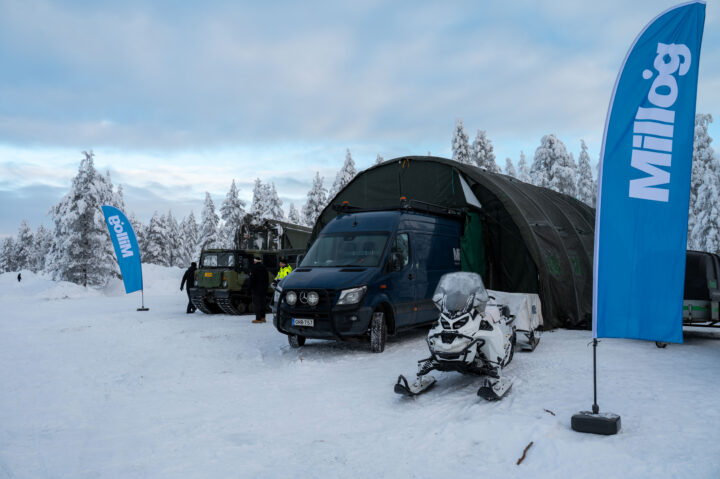
The maintenance concept was put to an Arctic test during the Griffin Tech Days, an exhibition and testing event organised by the Finnish Defence Forces and XD Solution. Taking place at the Rovajärvi training area and Kemijärvi airfield from 9–13 February, the event focused on assessing and developing technologies suitable for special operations forces in winter conditions. The Arctic environment posed a genuine challenge, with temperatures dropping to almost –30°C each day.
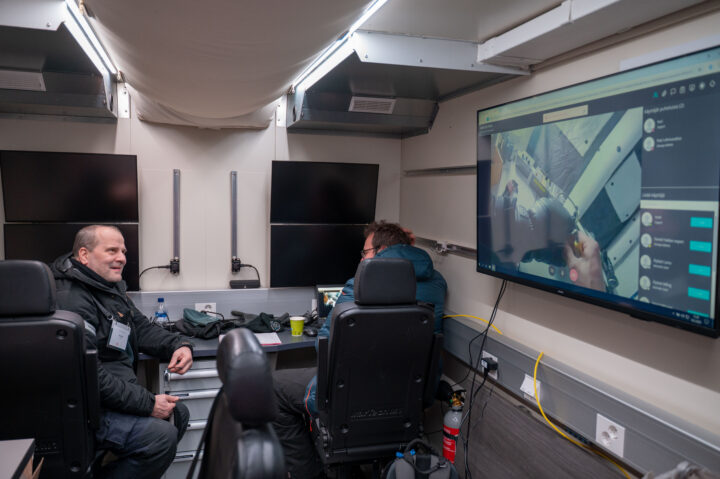
During the field test, Millog focused on the role of a temporary forward repair site located between combat units and fixed workshops. The test assessed how a two-tier support centre and the connectivity solutions used by technicians perform in a remote-assisted repair scenario.
“Remote support can be used, for instance, to diagnose faults and damage, or to guide a technician or a soldier in carrying out a temporary fix to safely evacuate an armoured vehicle from the combat area,” says Development Manager Kari Stöd.
Artificial intelligence (AI) was also put to the test in Lapland. AI applications were fed images and questions related to a damaged snowmobile, with the aim of exploring whether they could support the field operative by conducting fault diagnostics or generating repair instructions for damaged equipment.
“The test produced encouraging results regarding the use of AI, even though we were operating on public networks and using commercial applications with snowmobiles as test platforms,” Project Coordinator Matti Honkela explains.
Additive Manufacturing Supporting Spare Parts Logistics
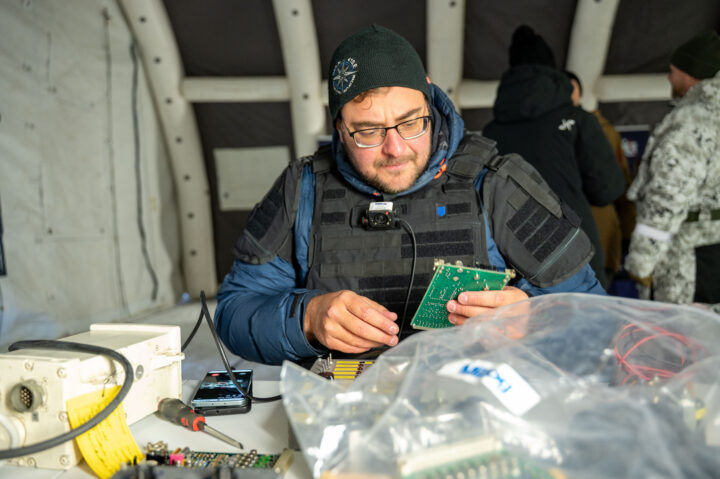
The field test looked closely at how additive manufacturing, such as 3D printing, could support repair operations, as well as the potential of drones for delivering spare parts. During the test, a malfunctioning snowmobile brake lever was transported to a subcontractor providing 3D printing services. The damaged part was scanned and modelled on site, after which a replacement part was printed at the supplier’s facilities.
“From the moment the fault was identified to having a new part in use took only a few hours, even though the transport alone accounted for nearly two hours of driving. By the next morning, hundreds of spare parts could’ve been produced. Although the original part was metal and the replacement was plastic, it would’ve been sufficient for temporary use, such as evacuating the snowmobile or moving it into shelter,” says Software Specialist Pasi Lehmusoksa.
Earlier research has already highlighted the potential of additive manufacturing in military logistics. At the same time, Lehmusoksa notes that there are still many questions, such as the requirements and processes with operating in exceptional or crisis conditions.
Concept Tested in Cooperation with the Finnish Defence Forces
The Finnish Defence Forces has followed Millog’s concept development with keen interest, and During Griffin Tech Days, the testing attracted a steady stream of national and international military observers, all curious to learn more about Millog’s work.
Honkela and Stöd emphasise the importance of cooperation in further refining the development. This spring, the concept’s functional elements will be tested for the first time in collaboration with the Finnish Defence Forces.
“It is great to be able to put the concept through its paces with our strategic partner for the first time. It brings valuable new perspectives to the development work,” Stöd concludes.